Burner Management System is a high-integrity safety solution developed on the DeltaV SIS platform. The control logic is engineered in compliance with standards EN 298 (for gas burners) and EN 267 (for oil burners), operating as a fully automated safety system.
Creating a burner application
1. Control & Safety Architecture
- Deterministic Sequential Logic: All safeguarding and burner sequence pathways are programmed via State Transition Diagrams (STD), mapping directly onto standardized DeltaV SIS
LSSTDFunction Blocks. - Cause & Effect Matrix Integration: Interlocks (Permissives) and safety trips are monitored using
LSCEMFunction Blocks. TheCAUSE_MASKparameter isolates active criteria for each specific sequence state and captures the initial triggering event (First-Out Cause). - Signal Status Handling: “Bad Status” detected on any critical process input or permissive loop automatically forces the logic into a fail-safe state (Trip/Loss of Permissives), ignoring corrupted data transitions
2. Multi-Fuel Process Management
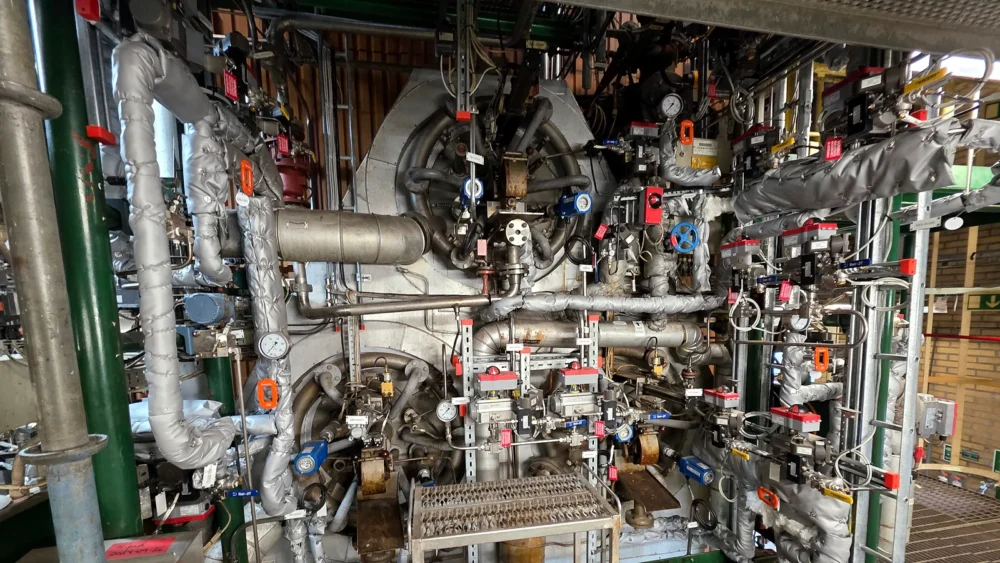
The system independently supervises three main boiler burners, and another two auxiliary Gas burners
- Gas Burner Sequence (
GAS_EXT_P): Utilizes an independent external pilot sequence. Rapid-acting Safety Shutoff Valves (SSOV1 & SSOV2) are tightly interlocked with pilot flame proof before main fuel execution. - Oil Burner Sequence (
OIL_EXT_P): Interlocked with atomization medium pressure (Steam). Per EN 267 compliance, it defaults to a non-volatile Lockout upon a single failed ignition attempt or loss of flame.
3. Integrated Safeguarding Subsystems
- Main Firebox Purge: A non-bypassable pre-ignition safety sequence. It requires validated damper purge positioning and a minimum combustion airflow (>50% of max airflow capacity) sustained over an internal timer.
- Leak Tightness Test Sequence: Performed independently per burner channel during initialization or shutdown. It commands boundary isolation checks across the SSOVs via automated high and low-pressure hold thresholds monitored by dedicated pressure transmitters.
- Oil Line BlowOut Sequence: Automatically triggered immediately following an oil burner shutdown state to clear residual fuel from line headers. It executes a staged low-flow and 100% flow steam purge to mitigate line coking and valve plugging.